| Product SKU | X8-4 |
|---|---|
| Generation | Brocade Gen 8 Fibre Channel director |
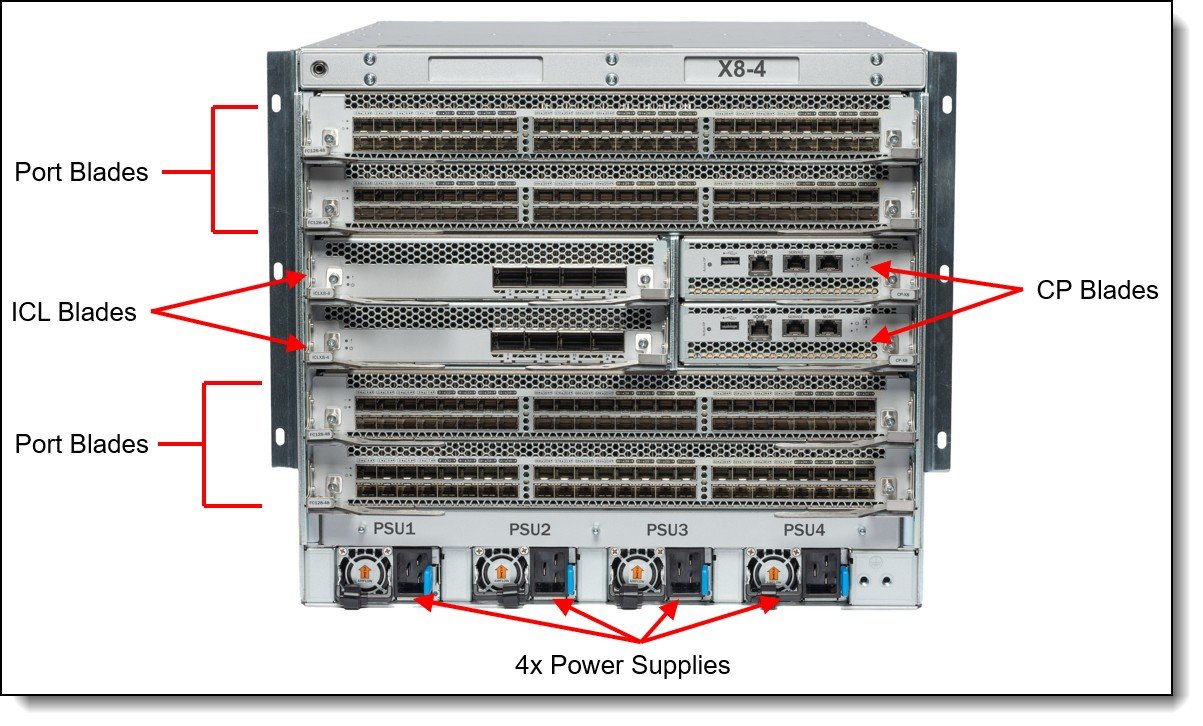
| Blade Slots | 4 open blade slots |
| Maximum Ports | Up to 2304 Fibre Channel ports with UltraScale ICL ports |
| Fabric Scale | Connect up to 12 Brocade Gen 7 or Gen 8 directors in a single fabric |
| Power Supply | Two PSUs for 1+1 redundancy |
| Availability | Designed for 99.999% uptime; hot-pluggable redundant power supplies, fans and WWN cards |
| Component | Specification |
| System Architecture | System Architecture |
| Chassis | X8-4: Non-blocking architecture |
| Control Processor | Redundant (active/standby) control processor blades. |
| Scalability | Full-fabric architecture of 239 switches. |
| Certified Maximum | 6000 active devices per switch; 56 switches, 19 hops in Brocade Fabric OS® (FOS) fabrics; larger fabrics certified as required. |
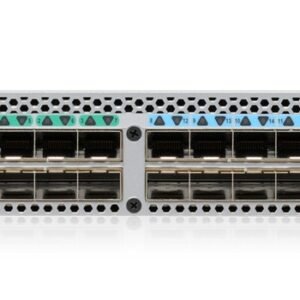
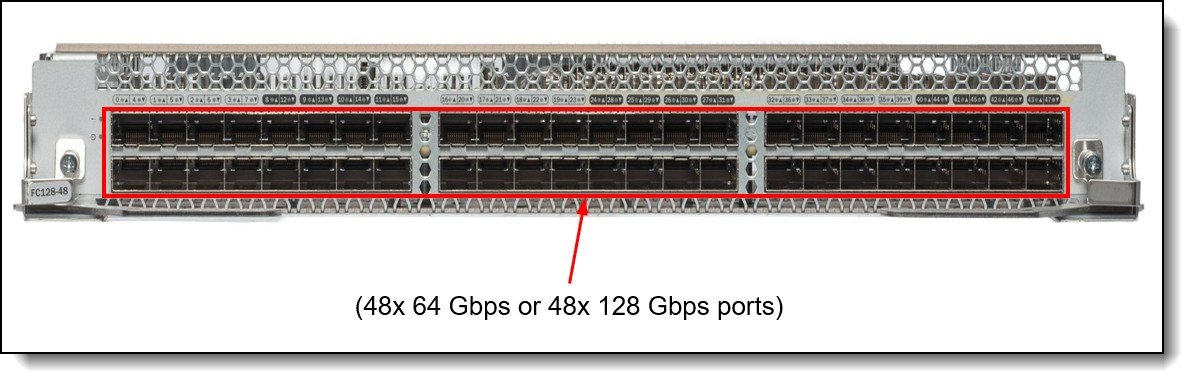
| Port Blades | FC128-48 port blade provides 48 ports of 64Gb/s Fibre Channel. |
| ISL Trunking | Frame-based trunking with up to eight 128G SFP+ ports per ISL trunk; up to 1024Gbps per ISL trunk between switches using 128, 64, 32, or 16G ports; Exchange-based load balancing across ISLs with DPS included in Brocade FOS. |
| UltraScale ICL Trunking | For chassis-to-chassis links on the inter-chassis link (ICL) blade to form a trunk: |
| Multi-chassis With UltraScale ICL Ports | Up to 4608 Fibre Channel ports; UltraScale ICL ports (16 ports per 8-slot chassis or 8 ports per 4-slot chassis, optical OSFP) connect up to 9 chassis in a full-mesh topology or up to 12 chassis in a core-edge topology. |
| Slot Bandwidth | 6144Gbps providing line-rate performance for the FC128-48 blade. |
| Maximum Frame Size | 2112-byte payload. |
| Frame Buffers | 40,000 per ASIC. |
| Fibre Channel Port Types | • FC128-48: F_Port, E_Port, EX_Port, M_Port, SIM, and D_Port. |
| Data Traffic Types | Fabric switches supporting unicast. |
| Media Types | • FC128-48 port blade: |
| USB | One USB port per control processor for firmware download, SupportSave, and configuration upload or download. |
| Fabric Services | BB Credit Recovery; Brocade Advanced Zoning (Default Zoning, Port/WWN Zoning, Peer Zoning); Congestion Signaling; Dynamic Path Selection (DPS); Extended Fabrics; Fabric Performance Impact Notification (FPIN); Fabric Vision; FDMI; FICON CUP; Flow Vision; F_Port Trunking; FSPF; Integrated Routing; ISL Trunking; Management Server; Name Server; NPIV; NTP v3; Port Decommission/Fencing; QoS; Registered State Change Notification (RSCN); Target-Driven Zoning; Traffic Optimizer; Virtual Fabrics (Logical Switch, Logical Fabric); SAN Fabric Intelligence; VMID+ and AppServer. |
| Long Distance | Fibre Channel, in-flight compression (Brocade LZO) and encryption (AES-GCM-256 encryption on FC ISLs [E_Port]); support for DWDM MAN connectivity. |
| System Components | System Components |
| Classes Of Service | Class 2, Class 3, Class F (inter-switch frames). |
| ANSI Fibre Channel Protocol | Fibre Channel Physical and Signaling Interface standard (FC-PH). |
| Port-to-port Latency | • Local switching: 580 ns at 128G with dual forward error correction (FEC). |
| Chassis Power | • All six 3000W power supplies are required to support N+N redundancy |
| Cooling | • Requires 3 fan tray assemblies for a 2+1 redundancy. A failure condition is 1 failed fan from any fan tray. |
| Management | Management |
| Security | AES-GCM-256 encryption on FC ISLs (E_Port); Device Connection Control (DCC); DH-CHAP (between switches and end devices); Fabric Configuration Server (FCS); Federated Authentication; FCAP switch authentication; FIPS 140-3 compliant; HTTPS; IP filtering; OpenLDAP; port binding; principle of least privilege architecture; user-defined role-based access control (RBAC); Secure Boot; Secure Copy (SCP); Secure Syslog; SFTP; SSH v2; Switch Binding; TLS v1.3; PQC algorithms; Trusted FOS Certificates (TruFOS); USGv6 compliant. |
| Warranty & Support | Warranty & Support |
| Hardware Warranty & SW Entitlement | Three-year customer-replaceable unit limited warranty with 9×5 next business day parts delivered. Also, entitlement to access latest FOS software |
| Architecture | Nonblocking shared memory; passive backplane; redundant active/passive control processor; redundant active/active core switching blades; single chassis ID (CID) card with built in redundancy. Card is not field replaceable. |
| Solution Availability | Designed to provide 99.999% uptime with nondisruptive capabilities, hot-pluggable components and a no-single-point-of-failure design. |
| Diagnostics | Active Support Connectivity (ASC) and Brocade Support Link (BSL); built-in flow generator; ClearLink optics and cable diagnostics, including link traffic/latency/distance; Fabric Performance Impact Monitoring (FPI); flow mirroring; dual forward error correction (FEC); frame viewer; IO Insight for SCSI and NVMe monitoring; Monitoring and Alerting Policy Suite (MAPS); nondisruptive daemon restart; optics health monitoring; POST and embedded online/offline diagnostics, including environmental monitoring, FCping, and Pathinfo (FC traceroute); power monitoring; RAStrace logging; Rolling Reboot Detection (RRD); SAN Fabric Intelligence (SAN FI); Syslog/Audit Log; VM Insight. |
Networking
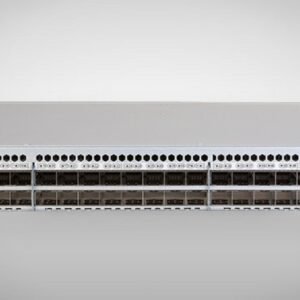
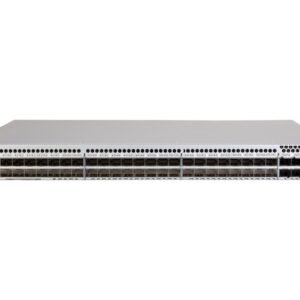
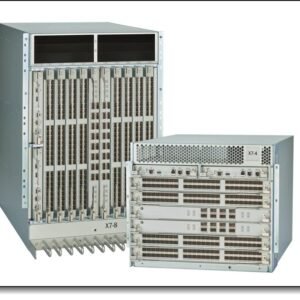
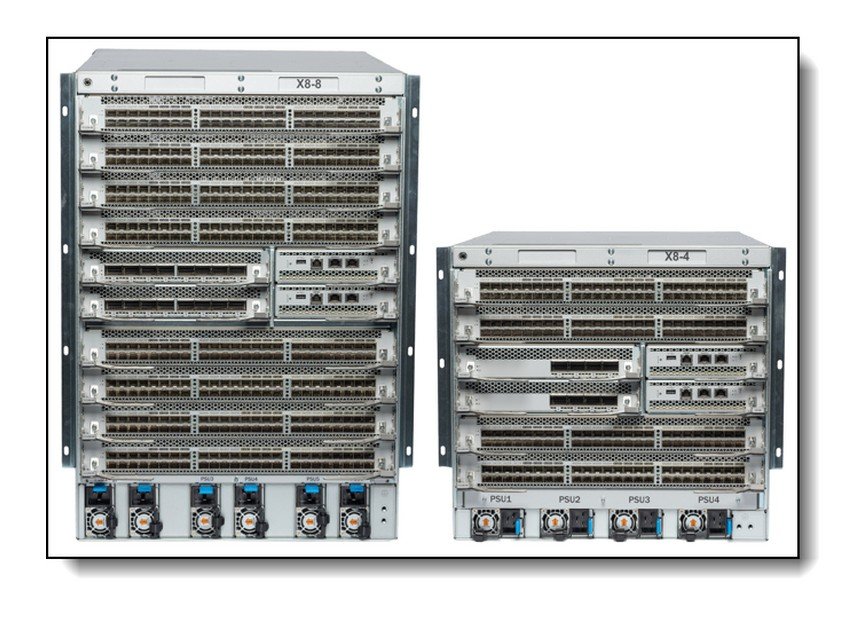
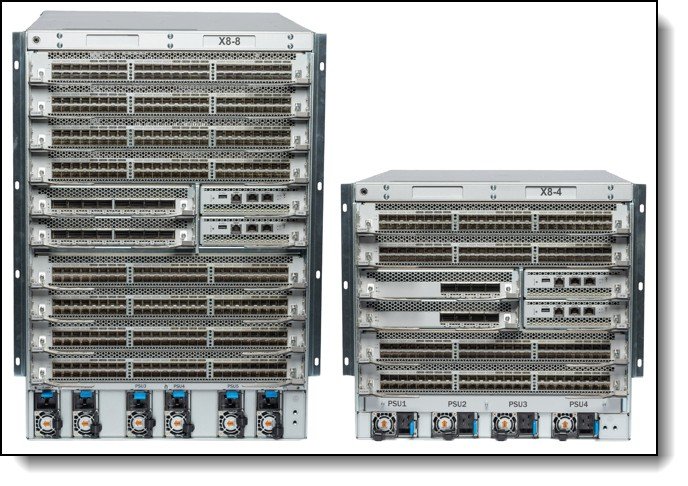
Lenovo X8-4 Gen 8 Fibre Channel Director
The Lenovo X8-4 Gen 8 Fibre Channel Director is a storage network switch from Lenovo, supporting FC128-48 port blade provides 48 ports of 64Gb/s Fibre Channel.
Overview
The Lenovo X8-4 Gen 8 Fibre Channel Director is a storage network switch from Lenovo supporting FC128-48 port blade provides 48 ports of 64Gb/s Fibre Channel.
It provides FC128-48: F_Port, E_Port, EX_Port, M_Port, SIM, and D_Port. delivering 6144Gbps providing line-rate performance for the FC128-48 blade.
Key Features
- Ports and port types: FC128-48 port blade provides 48 ports of 64Gb/s Fibre Channel. / Fibre Channel: 112.2Gbps line speed, full duplex; 57.8Gbps line speed, full duplex; 28.05Gbps line speed, full duplex; 14.025Gbps line speed, full duplex; autosensing of 128, 64, 32, and 16G port speeds depending on SFPs used. …
- Blade slots: 6144Gbps providing line-rate performance for the FC128-48 blade.
- Bandwidth: 6144Gbps providing line-rate performance for the FC128-48 blade.
- Management and software: Management / Brocade Web Tools; Brocade SANnav Management Portal and SANnav Global View; command-line interface (CLI); HTTPS; RESTful API; SSH; SNMPv3 (FE MIB, FC Management MIB); trial licenses for add-on capabilities. …
- Power and cooling: Requires 3 fan tray assemblies for a 2+1 redundancy. A failure condition is 1 failed fan from any fan tray. / X8-4: / Requires 3 fan tray assemblies for a 2+1 redundancy. A failure condition is 1 failed fan from any fan tray. …
Applications
- Fibre Channel SAN fabric expansion
- NVMe over Fibre Channel and all-flash storage networking
- Data center consolidation and fabric modernization
- Mission-critical storage networking with high availability
Configuration, availability and lead time depend on the required quantity, chassis and CPU platform, and delivery destination. Send your requirement to receive a quotation.